Stress is a part of life. It is also a part of working life. Deadlines, responsibilities, new assignments and unexpected challenges can all create stress.
However, any condition does not affect everyone in the same way. Different people experience stress differently.
The kinds of stress
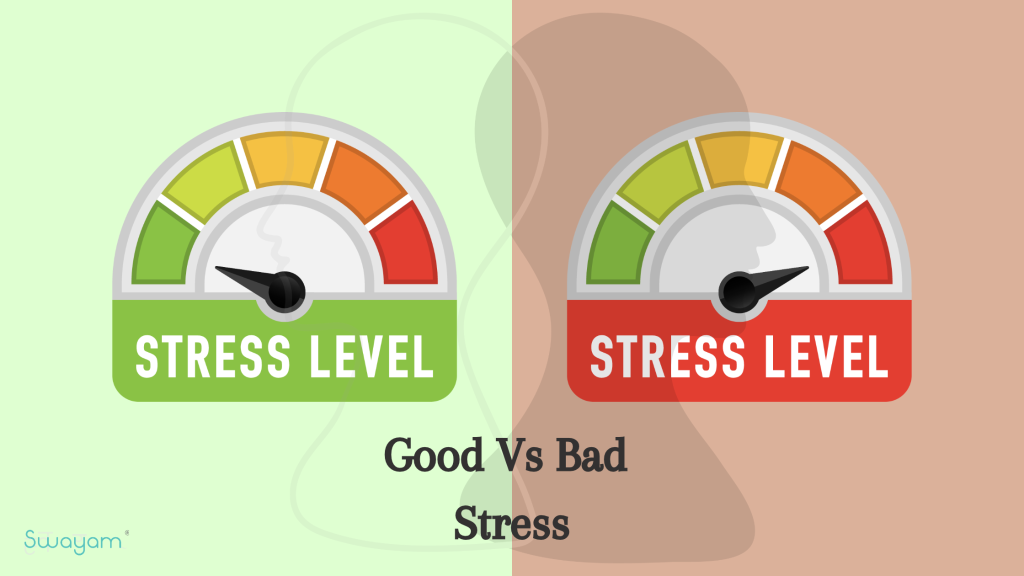
There is an optimal level of stress that motivates us to take action and achieve goals. Each person has a threshold for this optimal level. This ensures that we give our best to any endeavour we undertake. This stress helps us perform at our best.
When stress crosses that threshold, it can begin to affect their well-being and functioning.
There are 2 kinds of stress: eustress and distress.
Eustress is the kind of stress that can motivate a person, improve their focus and encourage them to work towards a goal.
Distress, on the other hand, occurs when demands feel overwhelming or difficult to manage. It can affect a person’s well-being and ability to function effectively.
Consider two employees who are assigned the same task, with the same deadline. One may see it as an opportunity to take on a challenge and demonstrate their abilities. The other may find the task overwhelming and struggle to manage the pressure.This difference does not necessarily indicate a difference in talent or capability. Different people simply perceive a task differently.
Identifying and enabling team members with distress
When a team member struggles with a task, the immediate response should not be to assume that they lack the ability to perform it. A manager needs to understand what is making the task difficult. Is the expectation unclear? Is the workload excessive? Does the employee need additional guidance? Or are there individual factors influencing how they respond to the situation?
Open communication is a good starting point. Creating an environment where employees can discuss their challenges without feeling judged, willing to understand expectations, provide the necessary support and make changes to working conditions where required are some ways to enable the team.
Managing stress is not a one-size-fits-all process.
A technique that helps one person may not be equally useful to another. Understanding the source of stress and how an individual responds to it is important before deciding what kind of support may be appropriate.
This is where understanding individual differences becomes relevant. Personality and behavioural patterns influence how people approach responsibilities, interact with others and respond to different situations. Psychometric assessments can provide useful insights into these patterns, helping individuals develop greater self-awareness and helping managers understand the different needs and working styles within their teams.
At Swayam Analytics, our personality and behavioural assessments are designed to help organisations understand these individual differences. They are not mental health diagnostic tools. Rather, they offer insights into the person behind the role, which can contribute to more informed conversations about development, support and workplace responsibilities.
The objective is not to expect every team member to respond to pressure in the same way. It is to understand what each person needs to work effectively while ensuring that the workplace itself provides reasonable expectations and adequate support.